
Introduction
Imagine playing the latest AAA game on a budget laptop or even your phone without downloading or installing anything. That’s the promise of cloud gaming. Platforms like Xbox Cloud Gaming, NVIDIA GeForce NOW, and PlayStation Plus Premium are reshaping how games are distributed and played.
This blog explores what cloud gaming is, how it works, its pros and cons, and whether it truly represents the future of the industry.
What Is Cloud Gaming?
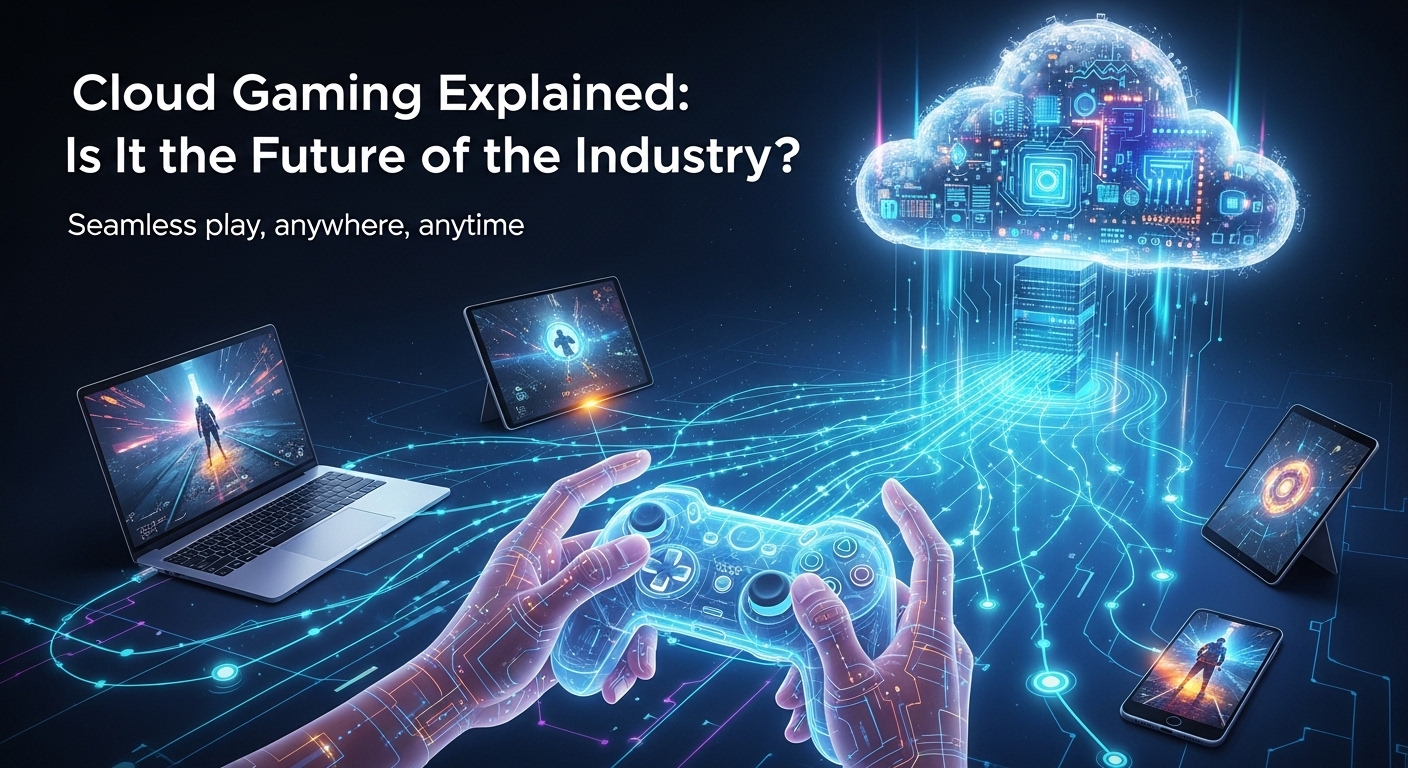
Cloud gaming streams games from remote servers to your device, similar to Netflix streaming movies. Players don’t need powerful hardware—just a stable internet connection.
How Cloud Gaming Works
- Game runs on a remote server with high-end specs.
- Video and audio stream to the player’s device.
- Player inputs (keyboard, controller) are sent back to the server in real time.
The Advantages of Cloud Gaming
- Accessibility: Play AAA games without expensive hardware.
- Convenience: No downloads or updates.
- Cross-Device Play: Start on one device, continue on another.
- Cost Savings: Eliminates the need for frequent hardware upgrades.
The Challenges of Cloud Gaming
- Latency: Even slight delays ruin competitive play.
- Internet Dependence: Requires strong, stable connections.
- Data Usage: High-resolution streams consume significant bandwidth.
- Game Library Limitations: Not all titles are available.
Current Cloud Gaming Services
- Xbox Cloud Gaming (Game Pass Ultimate)
- NVIDIA GeForce NOW
- PlayStation Plus Premium
- Amazon Luna
- Google Stadia (discontinued but influential).
Is Cloud Gaming the Future?
- Short Term: Still limited by internet infrastructure.
- Long Term: As 5G and fiber internet expand, cloud gaming could become mainstream.
- Hybrid Models: Likely future where local and cloud play coexist.
Conclusion
Cloud gaming offers a glimpse into a future where expensive hardware is optional. While challenges remain, advancements in internet speed and technology may make cloud gaming the dominant form of play in the next decade.