
Introduction
Video games bring joy, challenge, and community to millions worldwide. But like any form of entertainment, gaming can become problematic when it turns into addiction. The World Health Organization officially recognized “Gaming Disorder” in 2018, sparking debates across the industry.
This blog explores the science behind gaming addiction, its signs, psychological impact, and how players can enjoy games responsibly.
What Is Gaming Addiction?
- Defined as impaired control over gaming, with priority given to gaming over other activities.
- Must persist for 12 months or more to be diagnosed clinically.
Why Games Can Be Addictive
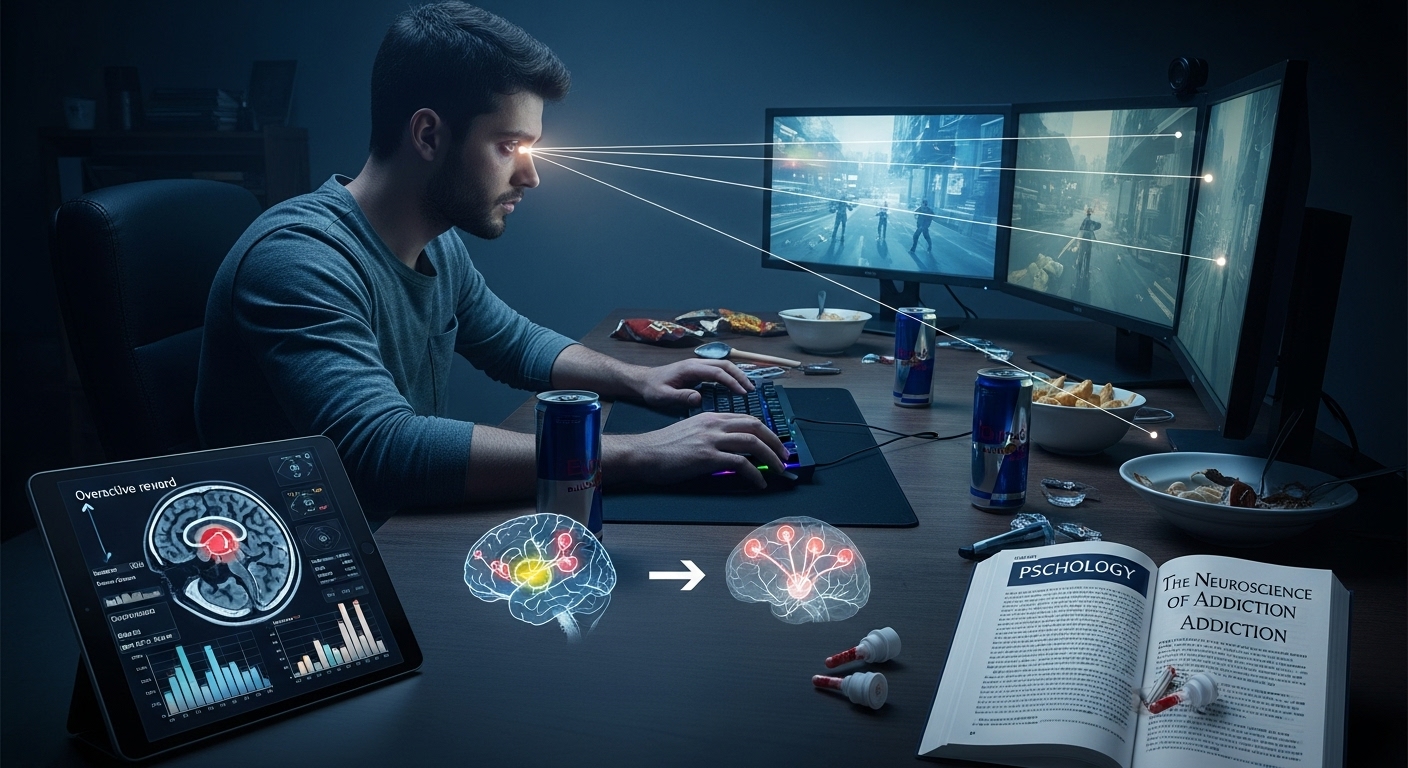
- Reward Systems: Games use dopamine-driven loops (achievements, loot, level-ups).
- Social Connectivity: Online multiplayer keeps players engaged.
- Escapism: Games provide relief from stress and real-life problems.
- Progression Systems: RPGs and MMOs create a sense of never-ending goals.
Signs of Gaming Addiction
- Neglecting work, school, or relationships.
- Playing for excessively long hours.
- Irritability when unable to play.
- Declining physical health due to lack of activity.
The Psychology of Gaming Addiction
- Flow State: Players lose track of time in immersive play.
- Variable Rewards: Similar to gambling mechanics, unpredictable rewards keep players hooked.
Effects on Players
- Positive: Can improve reflexes, problem-solving, and social skills (when balanced).
- Negative: Poor health, isolation, and mental health struggles if excessive.
Responsible Gaming Practices
- Set time limits.
- Use parental controls for younger players.
- Balance gaming with offline hobbies.
- Play with friends to keep gaming social.
The Industry’s Role
- Developers should avoid predatory monetization.
- Platforms can implement screen time alerts and healthy gaming tips.
Conclusion
Gaming is not inherently harmful, but excessive play can be. Recognizing the signs of addiction and practicing balance ensures players can enjoy gaming’s benefits without falling into unhealthy habits.